The Science ofLiving andArtificial Robotsfor Precision Agriculture and Ocean Health
We connect materials science, sensing, and actuation to develop biohybrid and artificial robots. Our research aims to learn from soil, interact precisely with plants, and monitor the health of rivers and oceans.
We study how living and engineered systems sense, move, and exchange energy.
At Cornell’s Organic Robotics Lab, led by Rob Shepherd, we bring biology and materials science into robotics. Mycelium-based biohybrid robots provide a living interface, with the goal of learning about soil health. Soft robotic tools interact with plants, while aquatic machines open possibilities for observing rivers and oceans. Together, these efforts aim to guide precise agricultural inputs, reduce runoff, and understand waterway health.
Energy and manufacturing make these machines possible. Redox flow batteries integrate energy storage and actuation into soft bodies; wave-energy harvesters explore renewable power for marine systems. Our longer-term goal is enduring electric robots that make agricultural logistics and ocean-health monitoring more practical.
Volumetric additive manufacturing enables complex robotic structures and production on demand, with the potential to reduce overproduction and excess inventory. We translate discoveries through new ventures and the independent research programs of our alumni.
Five connected research directions
From soil to sea.
Sense living systems. Build capable machines. Extend their endurance.
01
Above ground
Listen to the plant.
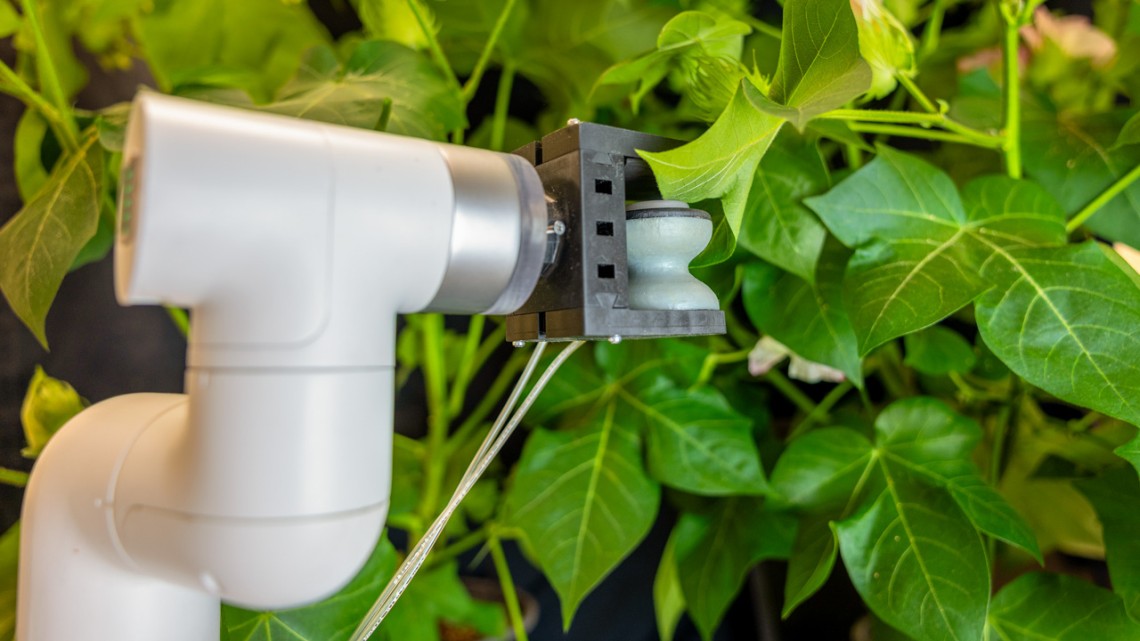
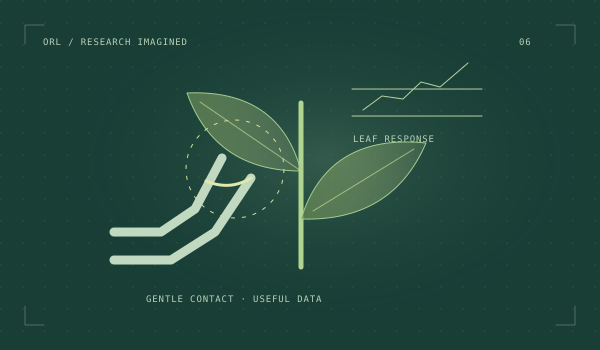
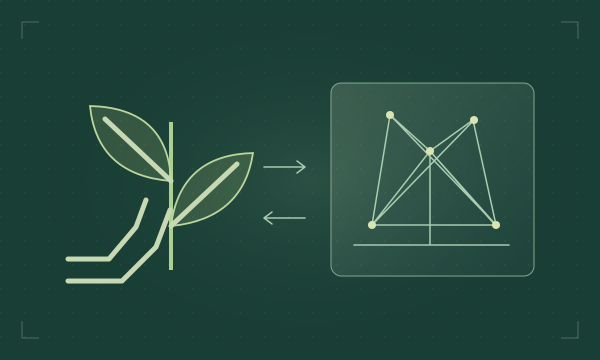
Soft robotic tools and optical phenotyping help us understand plant condition. We aim to inform more precise use of water and agricultural inputs, reducing waste at its source.
Soft robots can bring instruments below ground. Mycelium-based biohybrid robots offer a complementary living interface: our goal is to read fungal responses to soil conditions, learn about soil health, and inform agricultural decisions.
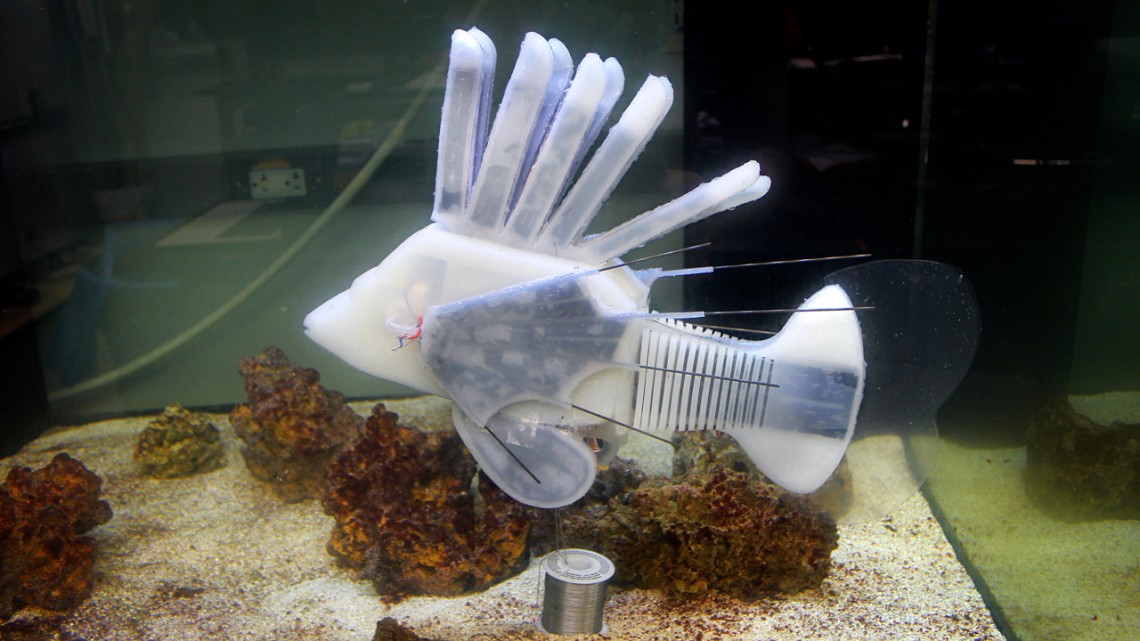
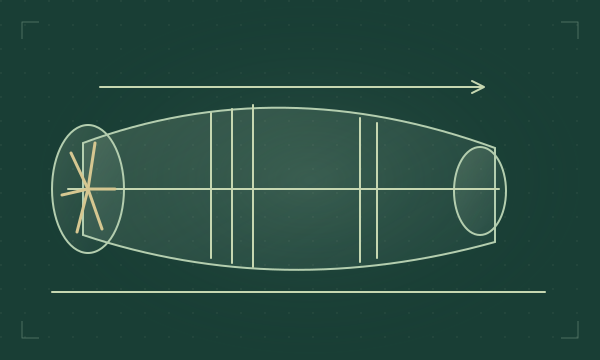
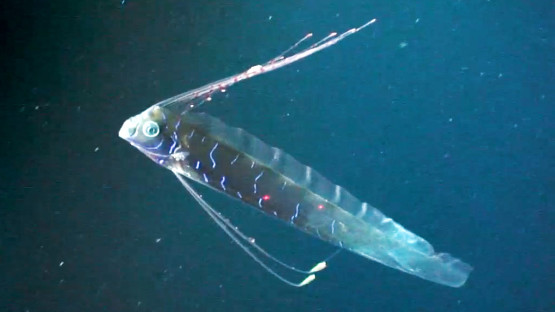
Soft aquatic robots and embodied energy offer a path toward sustained underwater surveying. Our vision is to monitor river and ocean health and connect those observations to decisions upstream.
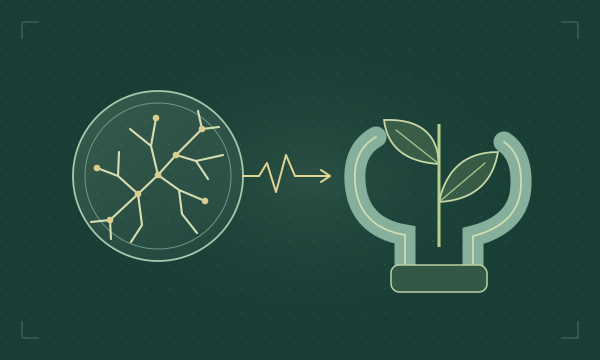
We are developing biohybrid robots that pair living fungal mycelium with engineered sensing and motion. Our goal is to use this interface in agriculture to learn about soil health and guide more precise use of agricultural inputs.
Our published robots use electrical signals from mycelia to control movement and respond to light. Building on that work, we aim to read soil chemistry through fungal responses—connecting conditions below ground to decisions above it.
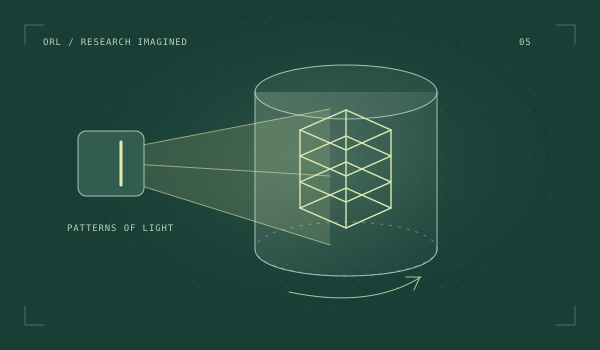
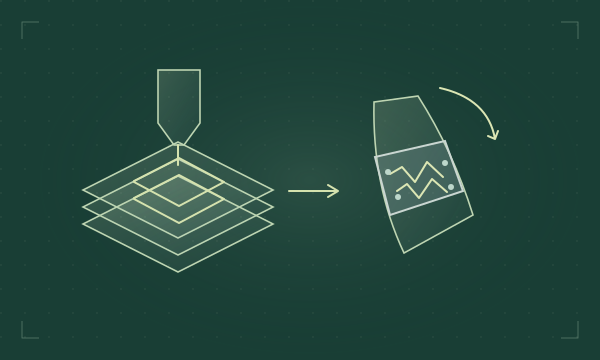
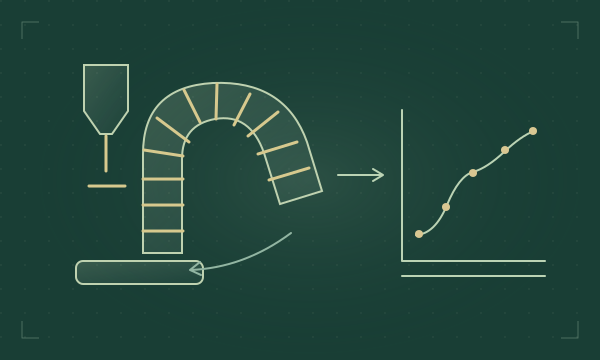
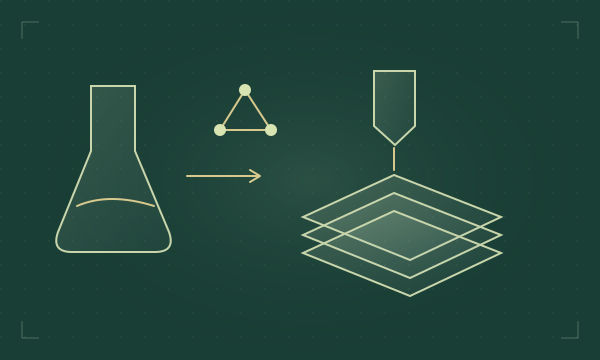
How we make a machine is part of its environmental story. Volumetric additive manufacturing forms three-dimensional structures with light, opening possibilities for complex geometries and integrated robotic components.
Producing parts on demand can reduce waste from overproduction and excess inventory. It also gives us a way to build the intricate soft machines needed to sense, move, and work in the world.
Less excess inventoryComplex machinesProduction on demand
A manufacturing concept: build complex forms with light.
05 Green energy & embodied energy
Energy for robots that endure.
Harvest energy from the environment. Store it in the machine. Our aim is to keep electric robots working longer, from agricultural logistics to sustained ocean-health monitoring.
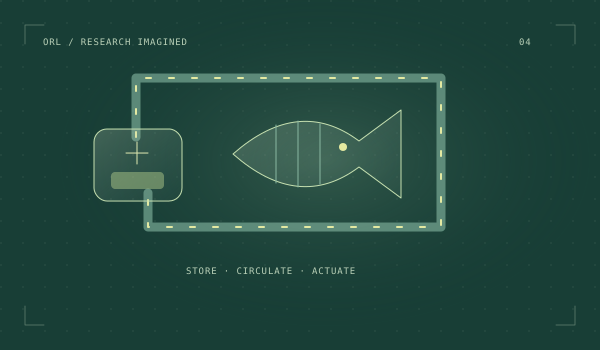
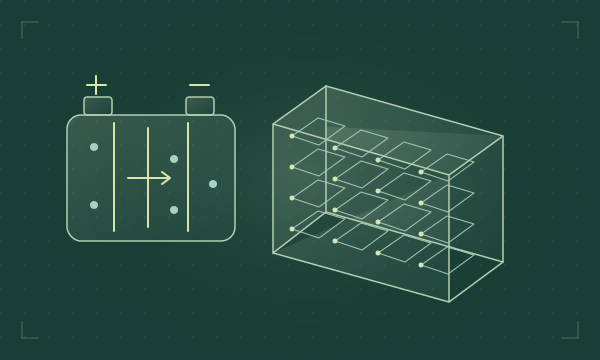
Redox flow batteries
Energy that moves with the robot.
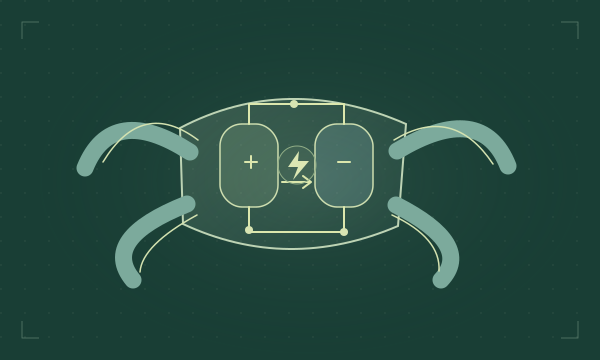
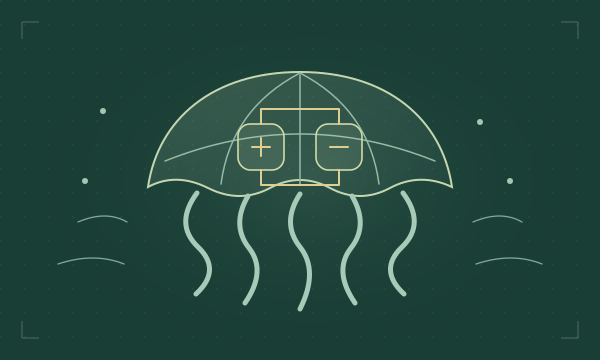
Our robotic circulatory systems use liquid electrolytes to combine electrical energy storage with hydraulic force transmission and actuation. Integrating these functions throughout a soft body opens a path toward longer operation and more adaptable machines.
Building on our aquatic robots, we are working toward enduring electric platforms that could simplify agricultural logistics and make ocean monitoring more continuous.
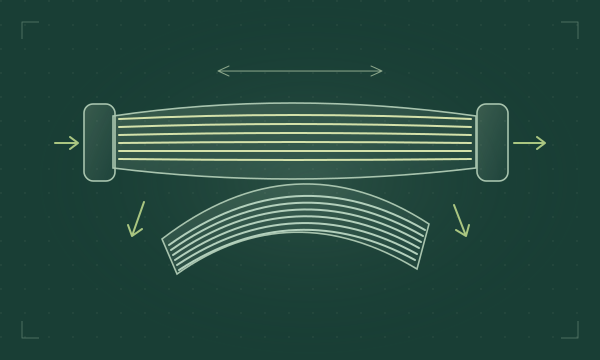
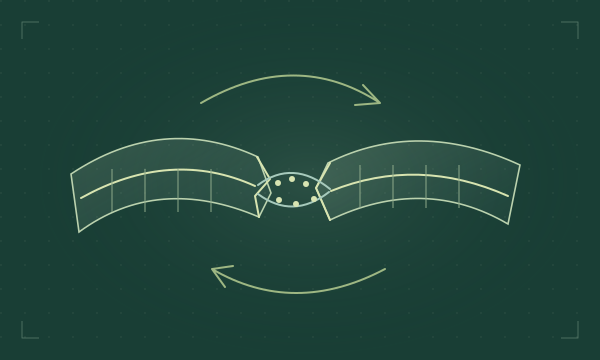
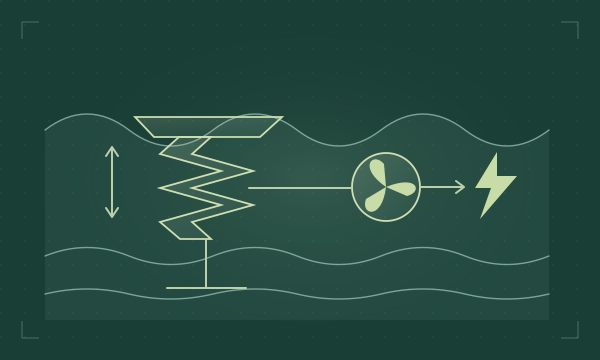
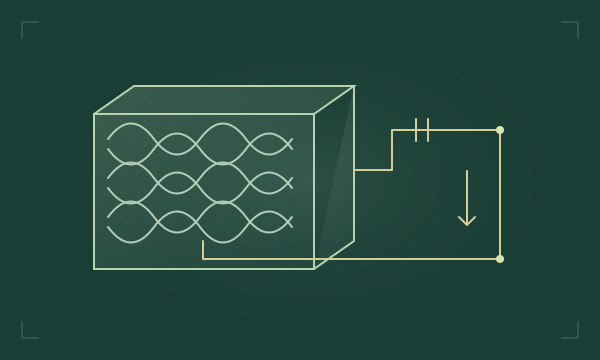
Our soft wave-energy harvester uses an origami-inspired elastomeric pump that stretches and compresses with passing waves. Pumped seawater drives a turbine to generate electricity, while the compliant design accommodates large motions.
Led by Ofek Peretz, this work was demonstrated in ocean tests and published in Device. It advances our longer-term vision of renewable power supporting persistent marine systems.
Renewable energy + enduring electric robots → smoother agricultural logistics and sustained ocean-health monitoring.
Illustrations show research concepts. Energy storage and wave harvesting are complementary research efforts; the combined field and ocean applications are future goals.
One connected research framework
Fundamental science. Living and artificial robots.
Different machines. Shared foundations.
01 The challenge
At the sourceAgricultural inputsUse resources precisely
→
Along the wayRunoff transportUnderstand what moves
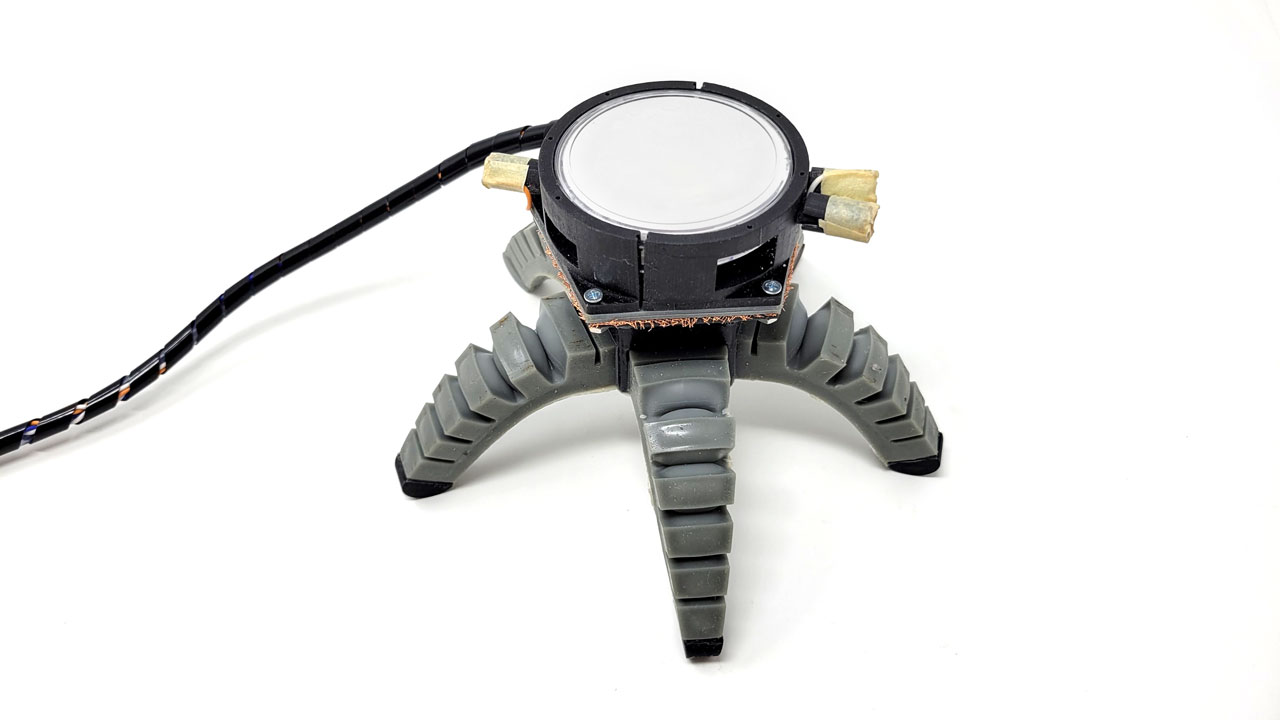
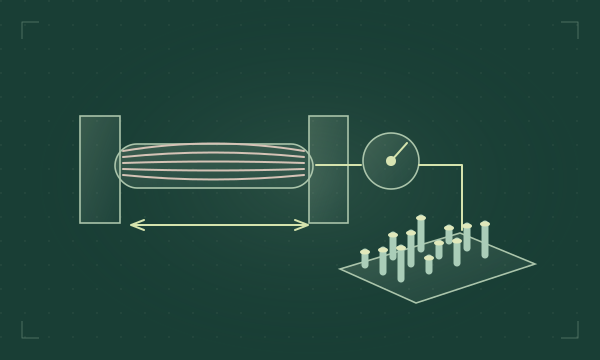
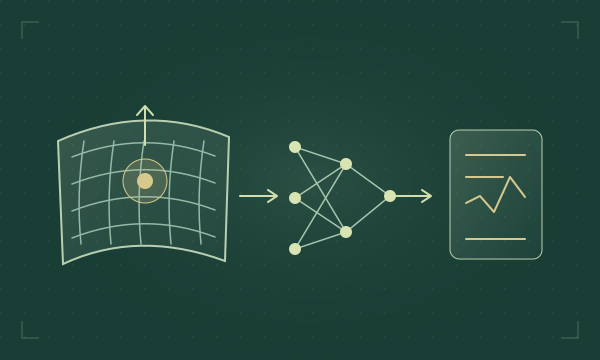
Optical and tactile sensors measure how soft materials deform and interact with their environment. They connect contact and motion to useful information for robotic systems.
Translation is part of our approach. Two companies co-founded by Rob Shepherd bring advances in soft sensing and volumetric manufacturing into practical use.
Optical sensing → Plant & human interactions
Organic Robotics Corporation
First product: LLume
Organic Robotics Corporation is commercializing our sensing technology, with plant interactions as a focus. Its first product, LLume, applies this technology to biometric monitoring of humans—bringing soft sensing into practical use.
Volumetric additive manufacturing brings complex parts and integrated components closer to production on demand. MAV Unlimited is translating this approach into manufacturing technology, with the aim of reducing overproduction and excess inventory.
Choose a date to see the presenter and presentation title. The schedule updates from our Google Sheet every five minutes while this page is open. Concept illustrations follow the title’s topic; untitled talks retain an imagined research sketch.
Group meeting ·
Yuto Haba
Wednesday, 9:00 a.m. · Upson Hall 531
Imagined research theme
Soft machines, smarter movement
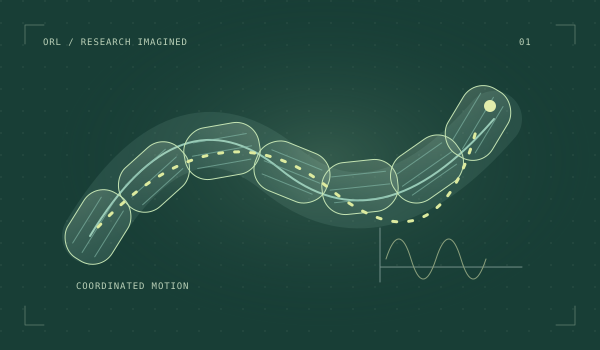
An imagined soft robot that changes its shape and movement through coordinated fluidic actuation.
Group meeting ·
Terrence Pierce
Wednesday, 9:00 a.m. · Upson Hall 531
Imagined research theme
Living materials in motion
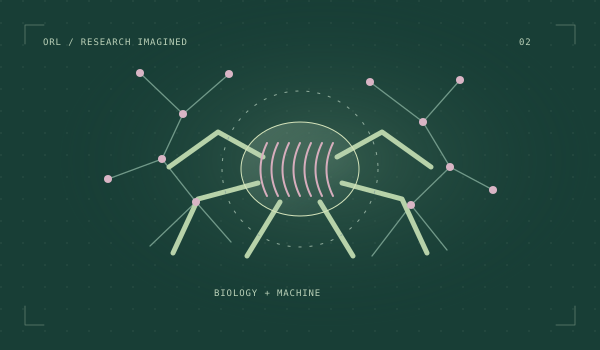
An imagined biohybrid machine that pairs living muscle-like materials with a soft robotic body.
Group meeting ·
Chongchan Kim
Wednesday, 9:00 a.m. · Upson Hall 531
Imagined research theme
A skin that can sense
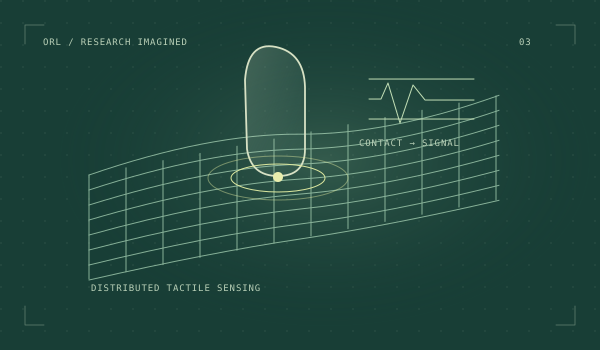
An imagined tactile surface that turns contact, pressure, and deformation into useful signals.
Group meeting ·
Youngjune Park
Wednesday, 9:00 a.m. · Upson Hall 531
Imagined research theme
Energy that circulates
An imagined robot with a circulating energy system that combines storage, actuation, and motion.
Group meeting ·
Douglas Palumbo
Wednesday, 9:00 a.m. · Upson Hall 531
Imagined research theme
Complex machines, made with light
An imagined volumetric printing process that builds intricate structures for soft robotic systems.
Group meeting ·
Hayden Webb
Wednesday, 9:00 a.m. · Upson Hall 531
Imagined research theme
The plant–machine interface
An imagined gentle robotic gripper that measures leaf condition to inform more precise farming.
Group meeting ·
Young Seong Kim
Wednesday, 9:00 a.m. · Upson Hall 531
Imagined research theme
Materials that recover
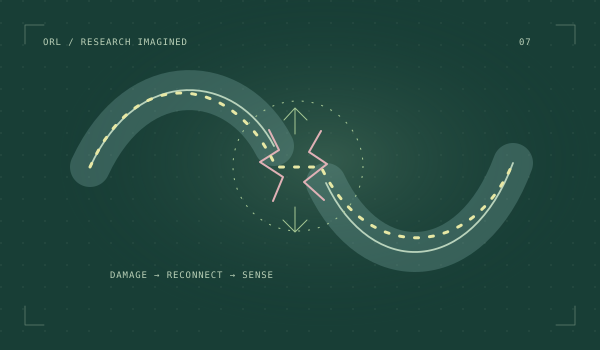
An imagined optical sensing material that reconnects after damage and keeps tracking deformation.
Group meeting ·
Daniel Garcia
Wednesday, 9:00 a.m. · Upson Hall 531
Imagined research theme
Exploring beneath the surface
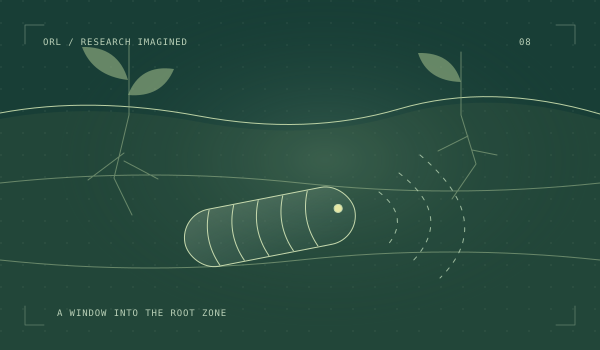
An imagined segmented robot that measures conditions around roots and beneath the soil.
Group meeting ·
Batist Geldhof
Wednesday, 9:00 a.m. · Upson Hall 531
Imagined research theme
Adaptive machines in water
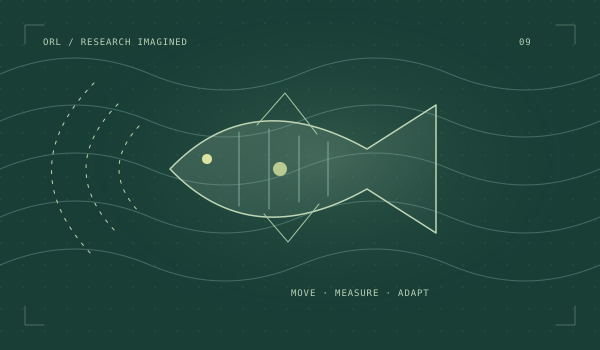
An imagined flexible swimming robot with distributed sensors for observing aquatic environments.
Sep 30, 2026: IROS – NO meeting.
Saved schedule from September 19, 2026. Enable JavaScript for automatic updates.
Faculty alumni · Independent research & teaching
A lab’s impact grows through its people.
Former doctoral researchers and postdocs carry ideas into independent research and teaching—from soft sensing and renewable energy to medicine, manufacturing, and planetary exploration.
Our alumni bring materials science and robotics into companies, national laboratories, and public-sector technology teams—developing new materials, intelligent machines, and technologies that move from discovery into practice.
Bringing software and systems experience to AnyTeam, following Cornell research on stretchable touch interfaces and neural-network-based touch recognition.
Now at Amazon, with research spanning tactile sensing, contact-rich manipulation, and large behavior models that help robots learn versatile manipulation skills.
A materials engineer advancing polymer manufacturing. Her LLNL research includes fast-curing silicone inks for printing intricate, self-supporting structures.
Advancing autonomous ground-vehicle technologies at DIU, building on Cornell research in soft robotic mechanisms and the translation of laboratory inventions into practical systems.
Interested in soft robotics, precision agriculture, waterway health, green energy, or new ways to manufacture? Connect with the Organic Robotics Lab to explore research and translation.
 Story image · Cornell Chronicle